Have you ever bought a cool jacket, backpack, or work uniform and thought, “Something is missing here”? Maybe you wanted to add your football club logo, a business design or a fun artwork that shows your personality or what you adore the most?
Well… we get that. In Ireland, custom patches have become a popular way to make clothing, uniforms and accessories stand out. But when it comes to Embroidered Patches vs Printed Patches, the whole debate gets everyone confused. And choosing the wrong one can cost you time, money and a lot of regret.
Both look great, but they work differently. So, which one should you choose? Scroll down to know more.
What are Embroidered Patches?
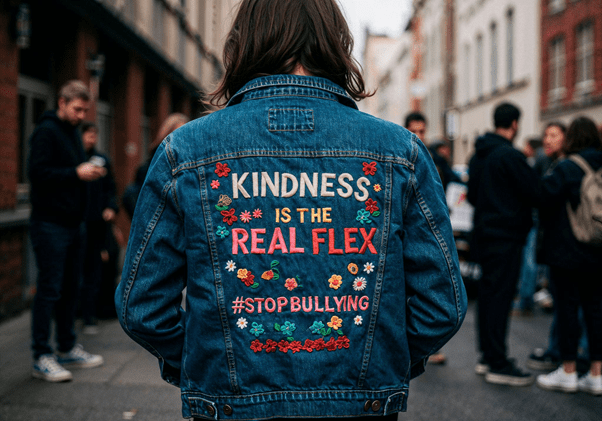
Embroidered patches are made by stitching coloured threads onto a fabric base. The design is created using colourful threads that are sewn in stitch by stitch, which gives the patch a raised and textured look.
You’ll mostly see embroidered custom patches on school uniforms, sports teams, military uniforms, and workwear. They have a classic appearance and never go out of style.
Fun Fact: Embroidery has been around for over 30,000 years. Ancient humans were basically the original patch artists!
What are Printed Patches?
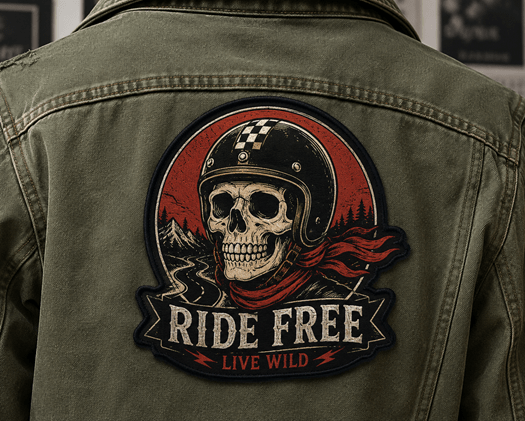
Printed patches use ink instead of thread to create the design. The artwork is printed directly onto fabric through heat or dye onto the patch surface.
They’re flat, super detailed and can handle complex artwork like gradients or tiny fonts that embroidery can’t pull off.
If your design looks like a detailed painting? Printed patches are your best mate.
What Patch Option Should You Choose in Ireland?
Choosing a patch totally depends on what you need and how you will use it.
If you want a traditional, premium look for uniforms, clubs and workwear, embroidered patches are usually the preferred option.
If your design includes detailed artwork, gradients, photographs or many colors, printed patches are the better choice.
Apart from this, if we talk about Ireland’s weather, it is famously damp (no surprise there, right?). That affects durability more than you think. For this sole reason, we recommend going for embroidered patches as they hold up brilliantly through washing and wear.
Still sceptical between Embroidered Patches vs Printed Patches? Let’s take a look in detail, below.
Pros and Cons of Embroidered Patches
Pros
● Super durable, survives washing machines like a champ
● Gives off a premium and professional appearance
● Great for uniforms, sports kit and branding
● Creates a textured 3D effect
● Works well on heavy fabrics
Cons
● Can’t handle super fine details or photo realistic images
● Not ideal for photographs
● Slightly more expensive than printed
● Limited colour blending options
Pros and Cons of Printed Patches
Pros
● Excellent for detailed designs
● Supports unlimited colors
● Ideal for photos and artwork
● Often more affordable for complex graphics
● Smooth and lightweight finish
Cons
● Less textured than embroidery, feels flat
● Can appear less traditional
● Can fade over time with frequent washing
● Not always preferred for formal uniforms
Embroidered Patches vs Printed Patches
| Feature | Embroidered Patches | Printed Patches |
| Durability | Excellent | Moderate |
| Detail Level | Good | Excellent |
| Colour Range | Limited (15 thread colours) | Virtually unlimited |
| Texture/Feel | Raised & tactile | Flat & smooth |
| Cost | Slightly higher | Budget friendly |
| Washing Resistance | Very high | Moderate |
How to Find the Right Patch Specialist?
If you have picked your patch type, now is the time to find custom patch specialists in Ireland, which, honestly, is half the battle.
Here’s what to look for:
Ask for samples first. Any decent patch maker will happily send you a physical sample before you commit to a big order. If they refuse? Walk away. Simple as.
Check their portfolio. Look for past work that matches your style like sports patches, fashion patches and corporate branding. A specialist who’s done your type of design before will always do it better.
Read reviews. Look for Google, Facebook and even Instagram comments; real customers don’t lie. Look for feedback on quality, delivery times and how they handle issues.
Note: You should also compare pricing, but don’t choose based only on cost. Quality matters more in the long run.
How to Identify a High-Quality Patch?
If it is your first time buying a custom patch, here’s how you can spot a great one before you even check the price tag:
For embroidered patches
Run your finger across the surface. It should feel firm, tightly stitched, and have clean, defined edges. If you see loose threads or gaps? That’s a red flag.
For printed patches
Look at the edges and colours under good lighting. High-quality embroidered patches vs printed patches have clean and crisp lines, no colour bleeding, but a smooth and even finish. If it looks blurry or pixelated, it’s low quality.
Also check the backing. Iron-on, sew-on, Velcro, make sure the adhesive is strong and appropriate for how you’ll use it.
FAQs
What is the best material for patches?
Twill fabric is one of the most popular choices. It is sturdy, holds thread well, and works perfectly for both embroidery and printing.
Which fabric works best for patches?
Denim, cotton, polyester, and canvas work very well with patches. These fabrics provide a stable surface that helps patches stay attached for a long time.
Do printed patches last?
When properly sealed and not frequently cleaned at high temperatures, printed patches are quite durable. When it comes to long-term durability (as in uniforms or outdoor clothing), embroidery is more durable. Otherwise, there is no problem with printed patches.
Can I stick a patch on my shirt at home?
Iron-on patches are super easy to apply at home. Just place the patch face-up, cover with a thin cloth, press a hot iron firmly for 30 – 45 seconds and let it cool.
What are cool patch ideas for my jacket?
Try vintage band logos, anime characters, city skylines, funny slogans or even a custom portrait. Mixing different patch sizes and styles across the back, sleeves and chest creates that layered look that’s all over street fashion right now.
Are embroidered patches waterproof?
Most embroidered patches can handle light rain and normal wear. However, they are not completely waterproof unless specially treated with protective coatings.
Ready to Choose a Custom Patch?
In conclusion, that is what you get: a comprehensive comparative analysis of embroidered patches vs printed patches in Ireland. Both are excellent in their unique ways. Embroidery patches take pride where strength and high quality are concerned. Printing patches excel where colour complexity and detailed artwork are required.
You just have to think about where the patch will be used and what message you want it to send. So, pick your style, find a trusted Irish specialist, and get creating. Your jacket (or kit, or apron) is waiting!